Sun Tzu’s list of qualities isn’t just about military command; it’s a blueprint for high-level leadership in any field, whether you’re running a startup, a project team, or a non-profit.
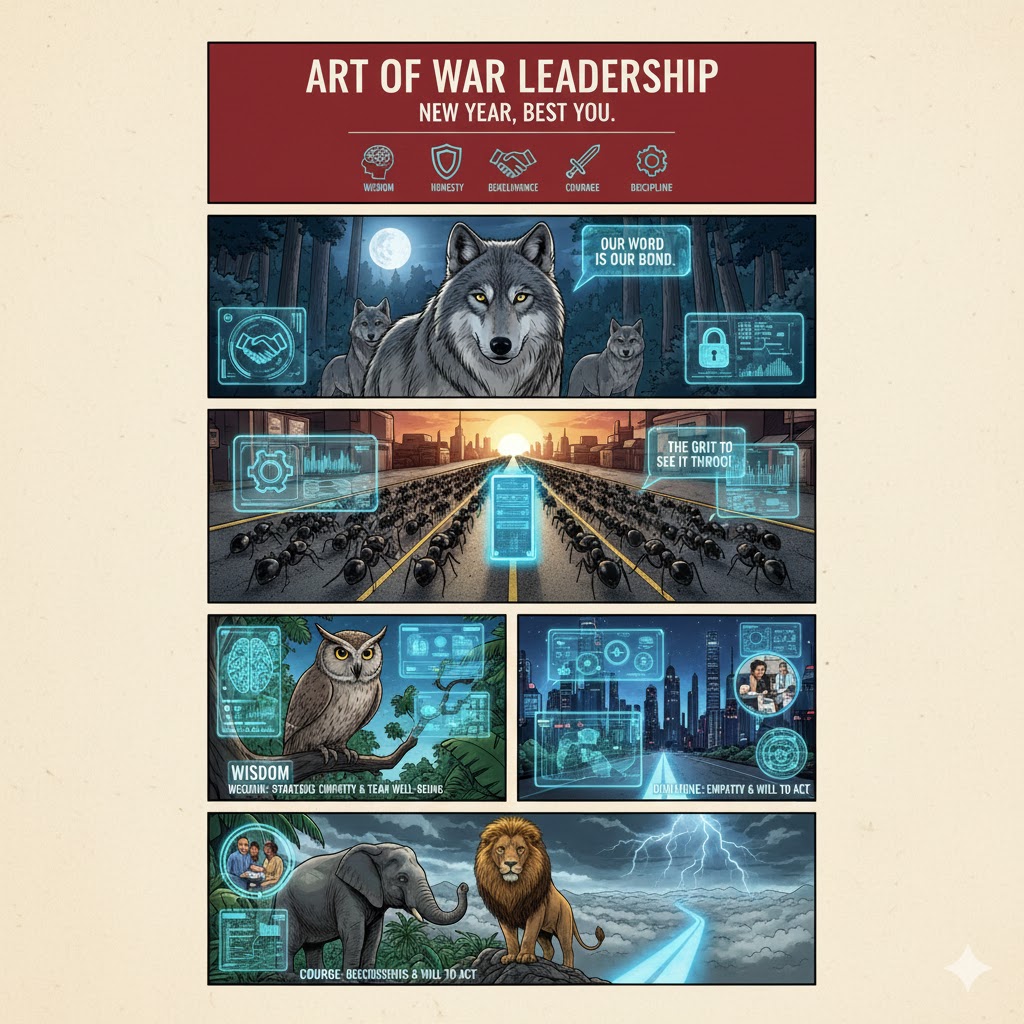
The Modern Summary: “A great leader needs to be smart enough to plan, ethical enough to trust, human enough to care, brave enough to act, and consistent enough to follow through.”
Here is how those five traits translate into the modern professional world:
1. Honesty (Integrity & Transparency)
- Then: Keeping promises to the troops to ensure trust.
- Now: Authenticity. In a modern workplace, this means being transparent about goals, admitting when you’re wrong, and fostering a culture of “psychological safety.” If your team doesn’t believe your word, they won’t follow your lead when things get difficult.
2. Discipline (Consistency & Accountability)
- Then: Strict adherence to military law and order.
- Now: Operational Excellence. This is about setting clear expectations and holding everyone—including yourself—to the same standard. It’s the “grit” to stick to a long-term strategy even when it’s boring or difficult.
3. Wisdom (Intelligence & Vision)
- Then: Understanding terrain, logistics, and the enemy’s psychology.
- Now: Strategic Thinking. It’s the ability to see the “big picture,” interpret data, and anticipate market shifts. A wise leader doesn’t just react to problems; they predict them and pivot before the “battle” even begins.
4. Benevolence (Empathy & People-First)
- Then: Caring for the soldiers’ well-being so they would fight harder.
- Now: Emotional Intelligence (EQ). Modern benevolence is about mentorship, work-life balance, and active listening. It’s recognizing that your “resources” are human beings. When people feel valued, their engagement and productivity skyrocket.
5. Courage (Decisiveness & Risk Management)
- Then: Bravery on the front lines and making tough calls under fire.
- Now: The Will to Act. Courage today looks like making a hard decision with incomplete information, taking responsibility for a failed project, or standing up for an unpopular but necessary change in the company.